Grade Work
Ground That's Ready Before Paving Begins
Grade work in Vilas for properties where uneven ground, poor drainage, or unstable base conditions prevent proper paving installation
Randolph Paving, LLC performs grade work in Vilas as the foundational step before any asphalt, concrete, or stone paving is placed. Without properly shaped and compacted ground beneath it, even quality paving material will shift, crack, and drain incorrectly within a few years. Property owners who notice standing water after rain, a visibly uneven driveway surface, or soft spots underfoot are often looking at a grading problem rather than a paving problem.
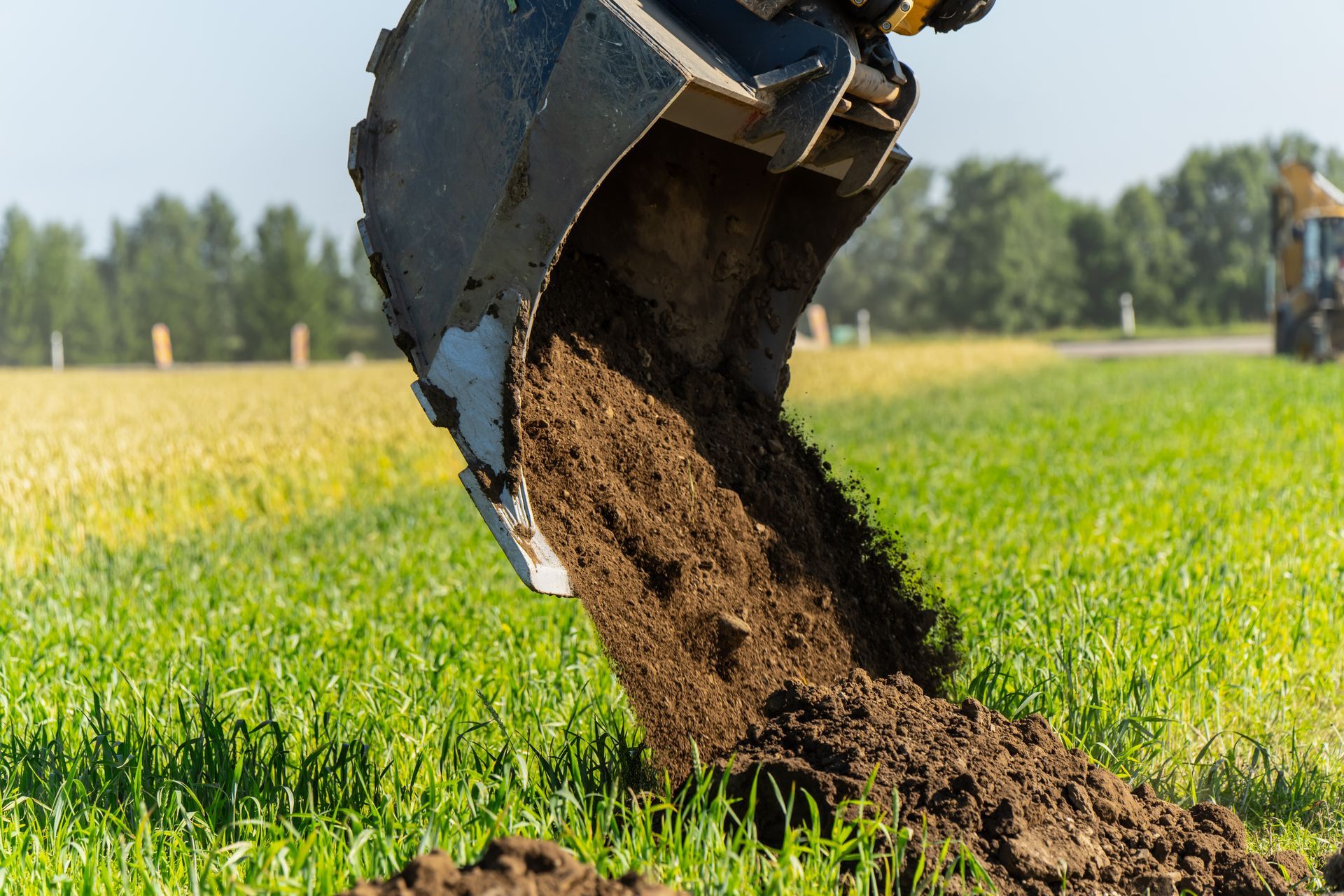
The grade work process involves cutting and filling the existing ground to establish the correct slope and elevation, then compacting the sub-base so it can bear the load of the finished surface without settling. The sequence matters: slope direction is determined first based on where water needs to exit the site, then the soil is shaped to that profile, and any low or soft areas are filled and compacted in lifts rather than all at once. This staged approach ensures the sub-base achieves consistent density rather than a compacted crust over loose fill.
Schedule a site evaluation with Randolph Paving, LLC to review your current ground conditions and determine what grading the property needs before installation begins.
How Grading Decisions Are Made on Site
Every grading project starts with reading the existing terrain and identifying where water currently moves versus where it needs to go. In Vilas, many properties sit on sloped or irregular land, which means grading is not simply leveling—it is directing slope deliberately so that water sheds away from structures, foundations, and finished paving surfaces. The goal is a consistent cross-slope or crown profile that keeps water moving without pooling at any one point.
Once grading is finished and the surface is compacted, what you will notice immediately is that water no longer collects in low spots, and the ground feels firm underfoot without the spongy give that signals an unstable base. The transition from an uneven, rutted surface to a smooth, sloped sub-base also makes the subsequent paving layer easier to install at uniform thickness, which directly affects how long that surface lasts.
Grading scope varies depending on the amount of material that needs to be moved, whether existing drainage channels or culverts need to be accounted for, and whether the sub-base requires added aggregate to bring it to the correct elevation. These are decisions made after the site is inspected, not estimated from a description.
What Property Owners Ask About Grade Work
These questions address how grading is performed and what affects the approach, particularly for properties in areas with irregular or sloped terrain like those common in Vilas.
What does proper grading slope actually look like when it is finished?
A correctly graded surface has a minimum slope of one to two percent away from any structure or paved area, which is subtle enough to be nearly invisible but sufficient to move water off the surface without erosion. You can verify it by watching where water travels after a rain rather than measuring by eye.
How does the type of soil on a property affect the grading process?
Soil that contains a high clay content holds its shape well when compacted but becomes slick and unstable when saturated, so the sub-base may need a layer of compacted aggregate on top before paving begins. Granular or sandy soils drain better but may require more compaction passes to reach adequate density.
What happens if grading is skipped or done incorrectly before paving?
Paving installed over an ungraded or poorly compacted base will develop low spots, edge cracking, and surface depressions as the ground settles unevenly beneath it—often within the first one to three years of use.
How is grading sequenced when a driveway meets an existing road or apron?
The finished grade at the connection point has to match the existing road elevation and slope precisely, which means grading typically works from that fixed reference point inward toward the property rather than from the structure outward.
What is the difference between rough grading and finish grading in a paving project?
Rough grading establishes the general elevation and slope of the site and handles the bulk of material movement, while finish grading refines the surface to the exact profile required before paving is applied—both steps are typically required on projects that involve significant ground reshaping.
Randolph Paving, LLC handles grade work as an integrated part of paving projects rather than as a separate subcontracted step, which keeps the slope design and paving installation coordinated from the same crew. Randolph Paving, LLC also performs grade work in Newland, Banner Elk, and West Jefferson.